Friday, 23 March 2012

Wiki Page

     Wikipedia is probably one of the most popular sites that students (whether or not they openly admit this) use to find information about different topics. Wikipedia is convenient to use, relatively quick to read, and gives a broad overview. Using Wikipedia on occasion myself has allowed me to quickly grasp a topic for research (or even just a topic of simple interest), before I move on to the next step of looking for more in-depth, academic and reliable sources of information.
     For this assignment, I had a chance to use Wikipedia as an active member and actually add information to an article "stub". It is quite simple to obtain a wiki account; however, one is not needed to make an edit to an article, it helps to add a name to the actions. Finding a wiki stub was also quite simple, and actually kind of fun. I had no idea how many "stubs" existed and in various subjects. Some I was surprised to find that there was so little information. However, the act of actually editing a wiki stub was not that simple or easy at all. Writing in Html-code is difficult, as the code itself is quite complex. Adding images were especially challenging. I had intended to add a picture of the drape suit to my own Wiki stub, as I figured visuals would help for understanding the context. However, finding an image that Wikipedia accepts (from wikimedia commons) was not possible. Considering the article was a stub, there was no relevant picture out there. In addition, sizing, adding a border, adding a caption, and reformatting the actual text was extremely difficult to attempt in Html code. Its surprising how pampered we are, only some time after use of the internet has become the norm. The actual content and writing of the article was not as complex.
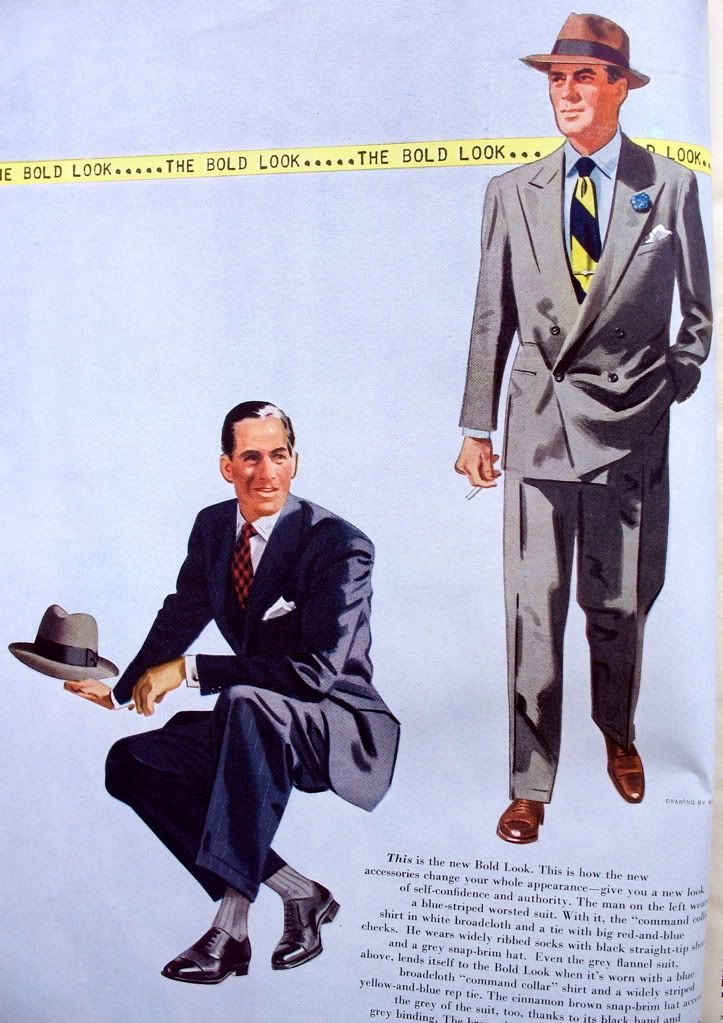
The 1950s Drape Suit from the "Bold Look". Retrieved from the Houndstooth Kid's blog.
[Untitled photo of the "Bold Look"]. Retrieved from: http://mrlapel.blogspot.ca/2008/08/bold-look.html.
 More images and information can be found in the Gentleman's Gazette

The topic I chose for my Wiki stub is the Drape Suit.  After the initial perusal, I found a single mistake in the original Wiki stub! The drape suit, although similar in appearance and design, is not the same as the sack suit. With this realization, I had found many mistakes in my own research and concept of the drape suit. It was fun re-learning and learning something myself, while trying to share some information with others. However, this assignment was stressful. The knowledge of how easily accessible Wikipedia is and who may be viewing my work caused me to raise some pretty high standards. Anyone could read the information and take it at its face value. Or, someone more knowledgeable than myself can read the article and correct any errors I may have made or information I did not include. The latter being a much more comforting thought.  In addition, anyone can edit the article, and can do so to make it either better or worse. While the openness of Wikipedia is a definite advantage, it can also be a strong disadvantage. If I had instead taken this assignment as an opportunity for sabotage, I could have inserted a lot of false and misleading information. It is always important to be aware of this when taking information from the internet.
   Rheon, a fellow classmate chose to update the Wiki stub: Fashion central. This article was interesting, personally, but it also happened to be related to my field of study. It is always exciting to learn what kinds of interesting stores with brands I adore exist in such close proximity to myself. More information on her personal experience and her article can be found on her own blog. It has a bright, fun, and adorable background, which does not take away from the text at all, due to her design set up. Her writing style and design of her blog reflects her fun and sweet personality. Her own experience was similar to my own, in that using Html code to update the Wikipedia page was the biggest challenge.
     While this first experience in using Wikipedia was challenging, I believe it was wholly worthwhile. Wikipedia is a huge pool of knowledge and sharing, and it is an exciting experience to be a part of it all. Making this first hurdle of overcoming the fear of making a huge mistake online, I feel much more inclined to participate again.

Saturday, 28 January 2012

W.I.G.: Wildy Impossible Goals

     Earlier this year, I attended the ACHES (Association of Canadian Human Ecology Students) conference. One of the guest speakers, Jessica Doody, made one point that had a major impact on me. It may be a little late to think about New Year's Resolutions, but I believe it is never too late for a Wildly Impossible Goal. 
So here, as I understand it, is how it works:
      -Think of one thing, anything, that you wish to accomplish. (Something "wildly impossible" or improbable).
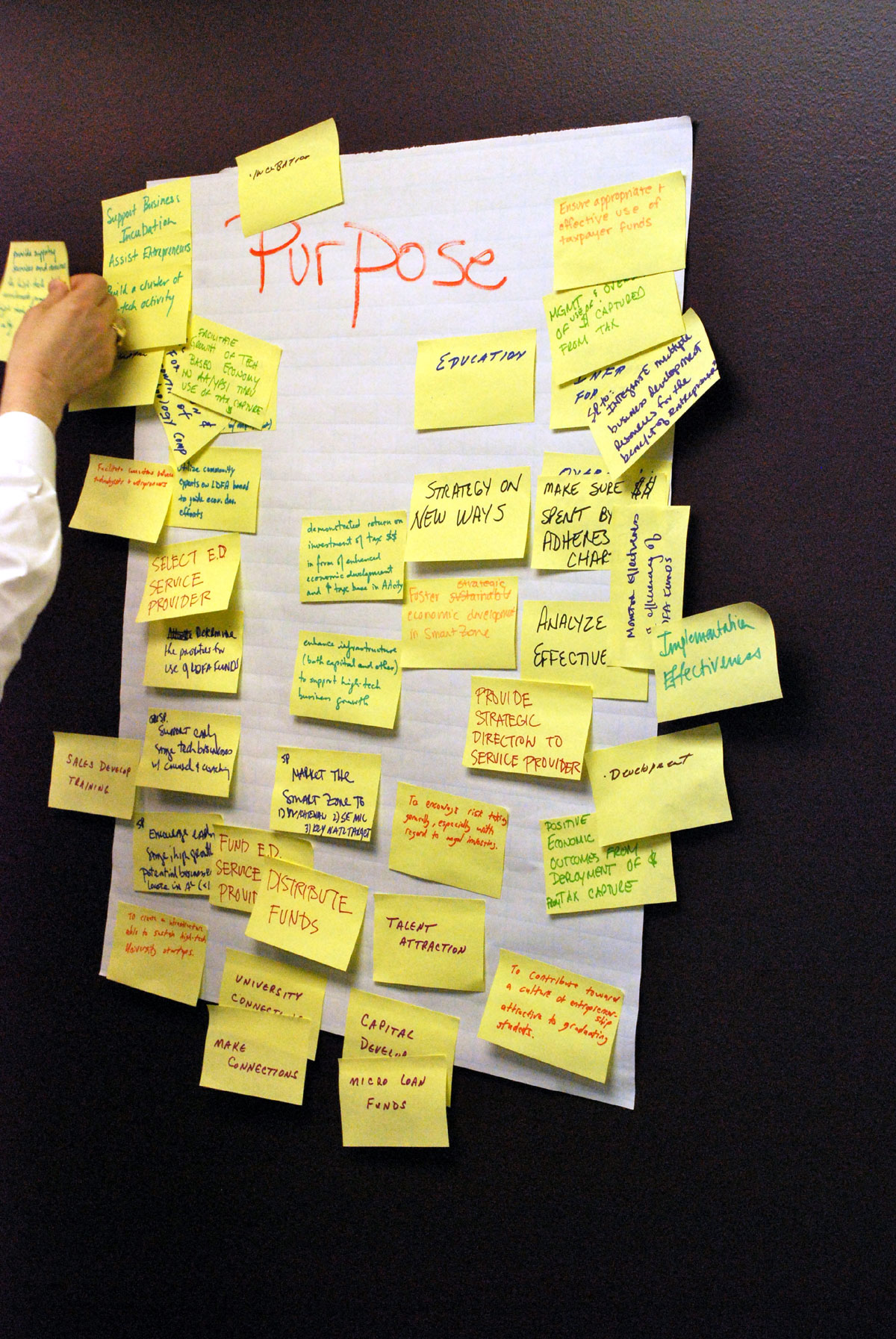
      -Get yourself a board, sticky notes, a poster board, etc. (Something big enough that you can write on and add to. I personally, like the poster board of sorts.)
      -At the top of the board, write down that wildly impossible goal.
       -Now, underneath that wildly impossible goal, start breaking down the steps it will take for you to achieve it. (Already seems kind of possible, right?)
      -With this check-sheet of small steps, you can tackle that goal one step at a time. Rip off the sticky notes, cross off the steps, or erase the words, as you go. Use whatever helps you feel more accomplished each step of the way.
Small tasks are easy to do, and before you know it, you will have worked your way up to that Wildly Impossible Goal.
The board may look like this one. Sticky notes are useful as they are easy to take off to re-update the board. (This photo can be accessed through the Ann Arbor Chronicle).
Askins, D. (2009). [untitled photograph of board]. Retrieved from:http://annarborchronicle.com/2009/04/30/expanded-ldfa-board-reflects-on-purpose/
      Jessica Doody herself is an entrepreneur and a mother, balancing her own personal life with her professional one. She has created two of her own lines of accessories (one for children and one for women). Unfortunately, I could not find a site or webpage that displays her work. But more importantly than her accomplishments is the underlying principle; she stresses how to use the things you love as a guide to your career. It is not about that well-paying job, knowing that you will be unhappy doing it. And I strongly believe in this: doing what you love is not work. It is unfortunate how few people can really do the things they care about (or even bother trying to attempt to do so).
     With the craziness of school, it can be really hard for me to just sit down and work on the things that really matter to me. There is always another paper, another assignment, or another lab. But these are just excuses. Today, I am going to start creating my own Wildly Impossible Goal board. So here's my W.I.G.: I would like to get an internship with a designer that will allow me to gain some valuable experience in the field of fashion design. To do this, I should:
     -look at some different job postings
     -create an excellent CV (despite my current lack of experience)
     -with my CV, I need to put myself out there and make some contacts
     -narrow down the most relevant information from my resume into my CV
     -improve my basic tailoring and seamstress skills
There we have it, some basic steps toward breaking down my own W.I.G. While a Facebook page is not quite an online portfolio, I may be working my way up to one line this: http://www.krop.com/agamo/ or http://amandamgreen.com/  or http://www.alexandra-anderson.com/. Working toward an online portfolio like those of these design students would also be a huge asset to applying for internships. One step out of my comfort zone, a few more into new and exciting territory. In class, we have also discussed writing a good, effective, and academic CV. It has helped me narrow down which format to use (Chrono-Functional), what information is important to include, and how to write an effective Objective statement.
      Another student in ALES204, has a clear, concise, and professional layout on her blog linking to her online resume (the Facebook page). She may not have used a professional image (of herself in business attire), but I think her volunteer photo says a lot more about her and what she has accomplished. The colours are fun and bright, revealing some personality, but work together to make an overall refreshing impression. Click here to have a look at her blog.

Thursday, 26 January 2012

Using Facebook Professionally

     I always understood Facebook as a social networking site. Today, however, I discovered how much more Facebook could be. Not only can I stay updated with news about my own social circle, I can also use Facebook in a business sense. Because I was always worried about online privacy and "the dangers of the internet", I had no idea that making an online resume could be as simple as making a page on Facebook, a site that I am already familiar with. I am moving one step closer to that online portfolio I have always wanted.
Here's my new Facebbook page, Aislinn Ales204 and a little sneak peek photo (this photo is also accessible through my Flickr account, if you click the link below):
Screenshot of Facebook page. Chan, Aislinn (2012). Retrieved from:
http://www.flickr.com/photos/75265882@N04/6768930589/
Fellow classmate, Carol, also has a new Facebook page. It is well organized and interesting to read, and she also happens to be in the same field of study as myself. You can have a look at it through her blog.
     Using this new resource means that future employers can easily see some of my credentials and previous work experience, without completely invading my Facebook profile and privacy. I appreciate how a Facebook Page is different from a Facebook profile. When I use my Facebook profile, I can stay connected to friends and acquaintances all around the world, and keep them posted on my own new experiences. However, my Facebok profile is private and would not always contain information that future employers would be interested in. Using a Facebook page, I can access a more professional side of this networking site and hopefully more exposure to more people working in the Clothing and Textiles field. Also, the internet is capable of introducing fast connections. Having an online resume, first, can save trees, and second can make the search for professional Human Ecology opportunities more accessible. I can reach out internationally for professional opportunities, without having to be in a different country every I apply.
     In addition, this Facebook page contains more information that a simple resume. It includes my work experience, but also a slightly more personal touch. It could be like meeting me, but not in a face-to-face situation. In Jonathan Gosier's blog, GosDot, he outlines some important reasons for creating an online resume. While a Facebook Page is not exactly an online resume, I believe the principles still apply. I admit, I was not always a fan of going online, but I have discovered some real advantages. So, why not join this new media world?

Thursday, 19 January 2012

Introduction

It is almost ironic how difficult introductions can be. You try to encompass who you are, I mean who you really are, in a total of about five seconds. So here I go:

My name is Aislinn Chan. I am a second year university student in the department of Human Ecology. My major is in Clothing and Textiles and my minor is in Design and Product Development. I believe that fashion is a huge part of our identities and how we relate to those around us. I love working with textiles and being creative, so I really look forward to working in the fashion field as an outlet of individual expression.
The Hippie movement was about a plea to end the war in Vietnam, a rebellious movement, reflected in their clothing, as the group wore.
What we wear makes up a huge portion of a first impression. Clothing can tell its own stories. But more than that, interaction takes place at all levels of the clothing industry. Designers need to know what people want, what would be most effective, what is already working, and what is maybe not working. Feedback on this first level is so important for improvement in design (and also, success of the design). Designers themselves do not work alone. Communication between the team is important so that the designer's vision can become a reality, in the most feasible way. Selling a product is all about communication; magazines, television commercials, articles, and advertisements communicate ideas of what the product symbolizes, what it is capable of, even who made it and what was involved in the process. 

Very recently, online shopping has become an important part of this industry. New designers can now put themselves out there and sell products, without having to own their own physical stores. For example, Stella & Dot, a jewelry 'store'. Some of these experiences online can be quite personal, informative, and easily accessible. 
I look forward to what I can learn from ALES204. I hope to improve my ability to communicate using technology.

(A quick reference to two of last year's students: Brianne Cheng and Arisha Seeras, and their blogs. They were super helpful!
http://areekatz.blogspot.com/
http://ales204briannecheng.blogspot.com/)